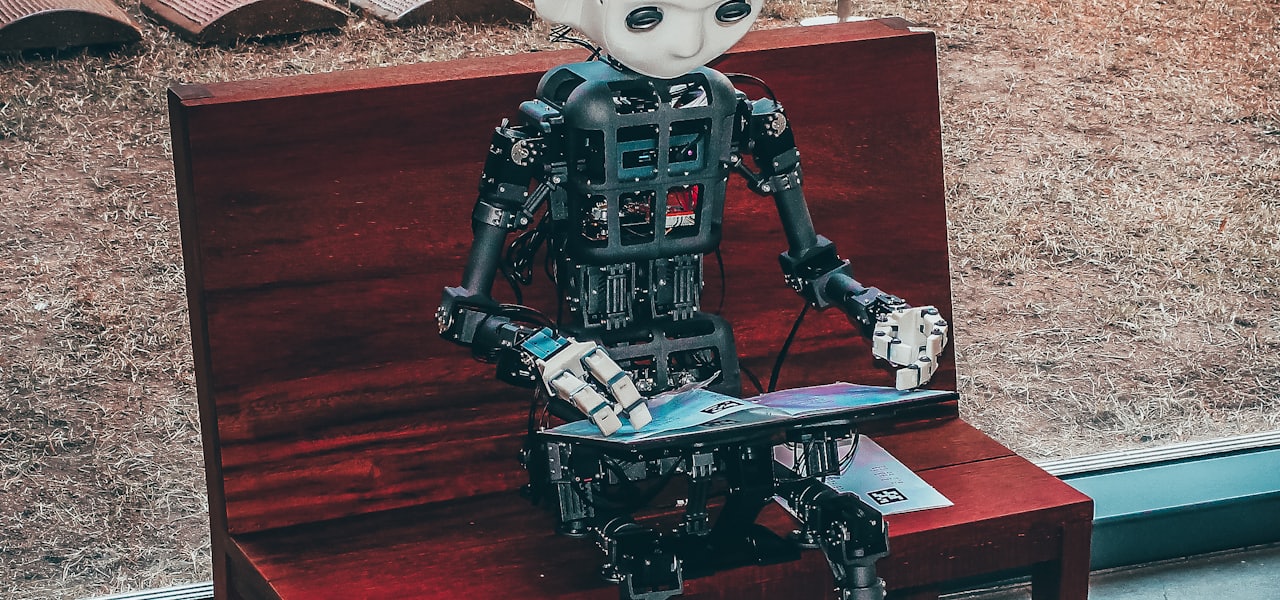
Gary Bryce Fogel (born 1968) is an American biologist and computer scientist. He is the Chief Executive Officer of Natural Selection, Inc. He is most known for his applications of computational intelligence and machine learning to bioinformatics, computational biology, and industrial optimization. == Education and Research == Fogel was born and raised in La Jolla, California, graduating from La Jolla High School. He received a B.A. in biology with a minor in earth sciences from the University of California, Santa Cruz in 1991 and a Ph.D. in biology from the University of California, Los Angeles in 1998. Fogel has published over 150 peer-reviewed publications in conferences and journals, 2 edited books, and 11 patents. As CEO of Natural Selection, Inc., his research focuses on the application of computational intelligence, machine learning, and predictive analytics in areas not limited to: Viral evolution, cellular differentiation, drug discovery, RNA structure, cis-regulatory elements, cancer, and evolutionary game theory as well as the development of evolutionary algorithms and other approaches. == Service == Between 2008–2018 Gary Fogel was editor-in-chief of the Elsevier journal BioSystems. He has served previously as an associate editor for IEEE Transactions on Artificial Intelligence, IEEE Computational Intelligence Magazine (2005–2010), IEEE Transactions on Evolutionary Computation (2001–2013), IEEE Transactions on Emerging Topics in Computational Intelligence (2016–2018), IEEE/ACM Transactions on Computational Biology and Bioinformatics (2004–2008), International Journal of Bioinformatics Research and Applications (2004–2007), International Journal of Data Mining and Bioinformatics (2005–2007), as a consulting editor for the Journal of Computational Intelligence in Bioinformatics (2006–2007), and as an editorial board member of Ecological Informatics (2005–2009) and BMC Big Data Analytics (2015–2020). Within the IEEE Computational Intelligence Society, Fogel founded the Bioinformatics and Bioengineering Technical Committee and established the IEEE Computational Intelligence in Bioinformatics and Computational Biology conference series, chairing the first two meetings in 2004 and 2005 in San Diego. He co-founded the IEEE Conference on Artificial Intelligence in 2023. Fogel served on the IEEE Computational Intelligence Society Administrative Committee (2004–2009, 2014–2022) and served as IEEE CIS Vice President of Conferences (2010–2013, 2019). == Teaching == Gary Fogel also serves as adjunct faculty at San Diego State University in the department of aerospace engineering as well as in the Computational Science Research Center. He has authored four books and numerous articles on the history of early aviation focusing on motorless flight. He is an associate fellow of the American Institute of Aeronautics and Astronautics and serves on the AIAA History Committee. == Awards == 2023 – Outstanding Contribution to Aerospace Education Award, AIAA San Diego Section 2022 – Elected Fellow of the Asia-Pacific Artificial Intelligence Association 2019 – Top 100 AI Leaders in Drug Discovery and Advanced Healthcare by Deep Knowledge Analytics 2019 – Outstanding Contribution to Aerospace Education Award, AIAA San Diego Section 2016 – Meritorious Service Award, IEEE Computational Intelligence Society 2016 – Outstanding Contribution to the Community Award, AIAA San Diego Section 2015 – Outstanding Enhancement of the Image of the Aerospace Profession Award, AIAA San Diego Section 2012 – Medal for Significant Achievement, San Diego Chapter of Sigma Xi 2012 – Fellow of the Institute of Electrical and Electronics Engineers for contributions to computational intelligence and its application to biology, chemistry, and medicine. == Aeromodeling == Gary Fogel has established national and world records for model aircraft. He helped establish the National Model Aviation Heritage program for the Academy of Model Aeronautics. He is a leader member, contest director, and fellow of the Academy of Model Aeronautics, and was inducted into the Academy of Model Aeronautics Hall of Fame in 2025.
EPUAP
ePUAP (Electronic Platform of Public Administration Services) is a Polish nationwide platform for communication of citizens with public administrations in a uniform and standardized way. Built as part of the ePUAP-WKP project (State Informatization Plan). Service providers are public administration units and public institutions (especially entities that perform tasks commissioned by the state). The platform provides service providers with technological infrastructure to provide services to citizens (recipients). Among the participants of ePUAP there are both central administration units and local governments, including municipal offices. Among the services offered by ePUAP is also Profil Zaufany (Trusted Profile), which enables electronic filing with legal effect without the need to use a qualified signature and SAML-based single sign-on mechanism, which enables the same ePUAP account to log on to websites of various service providers. The website www.epuap.gov.pl enables defining citizen and businesses service processes, creates channels of access to different systems of public administration and extends the package of public services provided electronically. Services available through the ePUAP platform may be accessed at the official website. Currently all administration services are available in Polish only. == Overview == It is described by the Polish government as "a coherent and systematic action program designed and developed to allow public institutions make their electronic services available to the public". The platform provides citizens, businesses and institutions with a number of services intended to ensure smooth and safe communication between: customer to administrations (C2A), business to administration (B2A), administration to administration (A2A). === Main goals === The main project objectives are to create a single, secure and electronic access channel to public services for citizens, businesses and public administration and also to reduce time and lower the costs of sharing information resources and functionalities of administration domain systems. Within the project, the following functionalities and services were delivered: Public services catalogue – a method of presenting and describing administration services, ePUAP platform – a web platform designed to provide public services on the Internet, Interoperability portal – a portal for experts working on recommendations for electronic documents and forms used within Polish administration systems to assure the uniformity of IT standards, Central Repository of Electronic Document Models – a database for valid document models and electronic forms. == History and background == The ePUAP project was carried out in the years 2005–2008. Currently, a continuation project ePUAP2 is being carried out with the following objectives: to increase the number of online services available to the public including the registry services, to widen the scale of usage of public electronic services, to integrate subsequent systems of public administration and business on ePUAP portal, to define new processes of customer and business services. === ePUAP2 === ePUAP2 is a public and administrative project that extends the set of functional services developed during the first edition of the project and is another step in the process of transforming Poland into a modern and citizen-friendly country. The implementation period for the project covers the years 2009–2013. Project financing The cost of the project “Construction of electronic Platform of Public Administration Services” – 32 million PLN was covered in 75% by the funds from the European Regional Development Fund (under the Sector Operational Programme "Supporting Competitiveness of Enterprises for the years 2004–2006"), while the remaining 25% of the cost was covered by a Polish national co-financing. Funds for the ePUAP2 project were gained from the 7th priority axis of the Innovative Economy Operational Programme and amounts to 140 million PLN (85% of eligible expenses were covered by the European Regional Development Fund, 15% were covered by a national co-financing). The trustee of ePUAP is the Polish Ministry of the Interior and Administration. == Legal regulations == According to the Polish law from 1 May 2008, public authorities are required to accept documents in electronic form (bringing applications and proposals and other activities in electronic form). ePUAP enables public institutions to meet this requirement by providing a service infrastructure to set up am electronic inbox. The ePUAP inbox meets legal requirements, in particular: issuing an official confirmation of receipt in accordance with the regulation of the Prime Minister of 29 September 2005 on the organizational and technical conditions for the delivery of electronic documents to public entities; cooperation with hardware security modules (HSM), meeting the technical requirements set out in the law; handling documents electronically in accordance with the minimum requirements set out in the Regulation of the Polish Council of Ministers of 11 October 2005 on minimum requirements for ICT systems. == Incidents == === Crashes === The ePUAP system very often happens smaller or larger failures. Because it is used to sign the application profiles trusted also in other electronic systems such as public administration. Electronic Services Platform created by ZUS, the system fault ePUAP it very difficult to settle official matters most electronically. === "Infoafera" === According to TVN and the release of TVP News from 10 April 2014, the creation of ePUAP is also associated with the so-called "Infoafera." On 10 April 2014, the Minister of Internal Affairs of Poland confirmed the information that the American technology company HP confessed to its participation in the Polish info-tour and corruption of Polish officials. By March 2014, the construction of ePUAP and its maintenance cost PLN 98.4 million. PLN 67.8 million has been used for this project. Challenged expenses only on the portal itself is approx. PLN 20 million.
Agents of S.H.I.E.L.D. season 4
The fourth season of the American television series Agents of S.H.I.E.L.D., based on the Marvel Comics spy organization S.H.I.E.L.D., follows Phil Coulson and other S.H.I.E.L.D. agents and allies after the signing of the Sokovia Accords. It is set in the Marvel Cinematic Universe (MCU) and acknowledges the continuity of the franchise's films. The season was produced by ABC Studios, Marvel Television, and Mutant Enemy Productions, with Jed Whedon, Maurissa Tancharoen, and Jeffrey Bell serving as showrunners. Clark Gregg reprises his role as Coulson from the film series, starring alongside the returning series regulars Ming-Na Wen, Chloe Bennet, Iain De Caestecker, Elizabeth Henstridge, and Henry Simmons. They are joined by John Hannah who was promoted from his recurring guest role in the third season. The fourth season was ordered in March 2016, with production taking place from that July until the following April. Due to its broadcast schedule, the season was split into three "pods": Ghost Rider for the first eight episodes, featuring recurring guest star Gabriel Luna as the supernatural Robbie Reyes / Ghost Rider and exploring mysticism in the MCU alongside the film Doctor Strange (2016); LMD, referring to the new Life Model Decoy program, for the next seven episodes which focus on recurring guest star Mallory Jansen as the LMD Aida; and Agents of Hydra for the final seven episodes, partly set in a "what if" virtual reality that allowed the return of former series regular Brett Dalton as Grant Ward. The season is also affected by the events of the film Captain America: Civil War (2016), and continues storylines established in the canceled series Agent Carter. The first episode premiered at a screening on September 19, 2016, with the season then airing for 22 episodes on ABC, from September 20, 2016, until May 16, 2017. The premiere debuted to 3.58 million viewers, down from previous season premieres but average for the series. Critical response to the season was positive, with many feeling that each pod was better than the last and in particular praising the visual effects and tone of Ghost Rider, the writing and acting of LMD, and the character development and political commentary explored during Agents of Hydra. The season saw series low viewership, but was still considered to have solved ABC's problem during its new Tuesday night timeslot, and the series was renewed for a fifth season in May 2017. == Episodes == == Cast and characters == == Production == === Development === Agents of S.H.I.E.L.D. was renewed for a fourth season on March 3, 2016, earlier than usual for the series. Executive producer Jed Whedon said on this, "We're thrilled to know going into the end of [season three] with certainty that we will be returning, because we can build our story accordingly." Executive producer Maurissa Tancharoen also noted that logistics for hiring directors for the season in advance would be easier, "which is a very nice privilege to have...that's a luxury". The end of the episode "What If..." features an onscreen tribute to Bill Paxton, who died in February 2017 and had portrayed John Garrett in the series' first season. The series paid additional tribute to Paxton in "All the Madame's Men" with promos during The Bakshi Report news segment showcasing John Garrett as a fallen American hero. The end of "World's End" features a similar onscreen tribute to Powers Boothe, who died in May 2017 and had portrayed Gideon Malick in the series' third season. === Writing === The season shifted to the later 10 pm timeslot, allowing it to take on a darker, more mature tone than previous seasons. According to Tancharoen, "The whole tagline for this year is 'Agents of S.H.I.E.L.D. After Dark'". The timeslot gave the series the opportunity to present an increased level of violence and partial nudity, as well as take more risks and present edgier themes. Following the third-season finale, Tancharoen stated that the fourth season would explore the guilt Daisy Johnson has over Lincoln Campbell's death. Executive producer Jeffrey Bell noted the writers tried to continue the tradition of "finding new combinations and new conflicts" between different sets of characters, given "a lot of procedurals [see] the same people doing the same thing for five years". Pairings that would be explored included Coulson and Mack, continuing from the end of season three, who have a mutual respect for one another due to their relationships with Daisy, and Leo Fitz and Holden Radcliffe, who work together. The Fitz-Simmons relationship was also explored more, examining the new challenges it presented for the two "working together, loving each other and living together". Following the third season's dealing with the themes of Captain America: Civil War (2016), such as the opposing reactions to the Inhumans, Whedon said that the question of "How do you deal with a war with powered people at that level, a government level?" was one that they wanted to answer in the fourth season. Tancharoen called the Inhumans "a permanent part of our universe now", with Whedon adding, "we have a quick-fire way of introducing people with powers. It gives us a lot of leeway in our world, and it lets us explore the metaphors of what it is like to be different. We will never close that chapter." With the Inhumans film being removed from Marvel Studios' release schedule, the series had "a little more freedom" and were "able to do a little bit more" with the species, including the potential of introducing some of the "classic" Inhumans, though the series would focus less on Inhumans than the third season which saw "a real significant Inhuman agenda story". It was not intended to be a spin-off of Agents of S.H.I.E.L.D. On the evolution of S.H.I.E.L.D. to featuring so many powered characters, Whedon said "the dynamic in the world has changed. There was one person with powers, and then by The Avengers there were maybe six total ... now they're much more prevalent, so there's reaction from the public based on that." The season is structured into three "pods" based on its airing schedule: the first eight episodes, subtitled Ghost Rider; LMD (Life Model Decoy) for the subsequent seven episodes; and a third pod for the final seven episodes called Agents of Hydra. Elements and characters cross over between the different pods, but the sections "definitely have a different feel" from one another, as Bell explained that 22 episodes "is a long time to hold a big bad or a single plot line, especially for an audience", and for the past two seasons, the series was able to have two separated halves that "allows us to introduce a big bad. And then, something happens and we rise somebody new ... Now, there's three of those." "Financial considerations" were also taken into account in creating the pods for the season, as using LMDs does not "cost as much as setting a guy's head on fire via CGI". In terms of writing the "complicated season", Whedon said the writers were "aware that our fans are our fans and have spent some time with these characters and are clever and see things coming sometimes ... Part of our job is to create not just what we are presenting on plot, but letting the audience be one step ahead of us and being one step ahead of that." He added that the writers knew that they wanted to tell a Ghost Rider story, an LMD story, and a "what if" scenario, and the hardest part was making each pod still fit together as a single season. The major connection ultimately became the Darkhold, which leads from the magic of Ghost Rider to the advanced science of LMD and then the Framework in Agents of Hydra. Ghost Rider also reappears in the final episode of the season, "World's End", as an additional connection. ==== Ghost Rider ==== While planning the fourth season, Marvel suggested that the series introduce Ghost Rider, after the character's film rights had returned to Marvel from Sony in May 2013. Loeb felt that this made the season unquestionably "the series' biggest" with the "most ambitious story yet". He added that "one of the things that we talked about is, S.H.I.E.L.D. always looked out for the weird, the unusual, the things that were and could be a problem for the public", and Marvel realized that Ghost Rider's abilities, which are more mystical than anything seen in the series to date, opened up "a quarter of the universe that we haven't really spent a lot of time exploring ... what happens if our very real, our very grounded agents who are very much a family have to take on something that is as bizarre and powerful and unique as Ghost Rider." Bell added that the producers would have been willing to give an entire season of the show to a Ghost Rider arc if the season was 13 episodes or less, but 22 episodes seemed too long to "feel like one flavor". The Robbie Reyes version of Ghost Rider was chosen over other versions of the character from the comics because of his relationship with his brother Gabe, w
Take Us to Your Chief: and Other Stories
Take Us to Your Chief: and Other Stories is a collection of nine short stories by Canadian author, playwright, and journalist Drew Hayden Taylor published in 2016 by Douglas & McIntyre. Taylor, who is part Caucasian, part Ojibwe, explains in the acknowledgments section of the book that the origin of the project lies in several failed attempts "to compile an anthology of Native sci-fi from Canada’s best First Nations writers." The stories explore contemporary First Nations social issues through employing a number of 1950s-era science fiction tropes and themes in these stories, including time travel, alien contact, and superpowers. Many reviews of the books have noted Taylor's use of humor to examine dark subject matter, such as the heritage of Canadian Indian residential schools, First Nations suicide rates, or the water quality crisis on Canadian reserves. == The Stories == "Andrei nas" "I Am...Am I" "Lost in Space" "Dreams of Doom" "Mr. Gizmo" "Petropaths" "Stars" "Superdisappointed" "Take Us to Your Chief" == Story summaries == === Foreword === In his foreword, Taylor describes the genesis of Take Us to Your Chief: and Other Stories and invites readers into, in his term, a “new terra nullius.” He begins by describing his biracial upbringing and heritage. He points out that First Nations people are rarely associated with technology or science fiction, in part because Indigenous peoples were often at a technological disadvantage against European colonizers. He references the few examples that he can think of from popular culture, such as the Star Trek episode called “The Paradise Syndrome,” in which First Nations people are portrayed as stereotypical Indians in hippie clothing. He also elaborates on his fascination with the world of sci-fi, which first started in comic books. He enjoyed the literary work of H.G. Wells, such as The Time Machine and The Invisible Man. Since sci-fi is a world of endless opportunities, he intends that these short stories help people explore science fiction through Native peoples’ minds, something that needs to be explored more thoroughly. === "A Culturally Inappropriate Armageddon" === “A Culturally Inappropriate Armageddon” is set on a Haudenosaunee reserve, towards the end of the Oka Crisis, with a handful of people that work at its first ever radio station, C-RES, which opens in 1991. Part 1, titled “C-Res Is on the Air,” depicts Emily, Aaron, and Tracey on their first days at the station. Within the group, there is a constant debate between broadcasting popular programming, including science fiction and film reviews, and culturally-relevant programming meant to aid in cultural revitalization efforts. One night, Aaron is late to work but once he shows up he can't stop talking about radio transmissions broadcasting into deep space, an event that has been occurring since the initial discovery of the radio waves by Heinrich Hertz. The story then skips ahead seven years to 1998, when Emily is struggling to find better content for her station until Tracey stumbles upon an old anthropological record named “The Calling Song” that they decide to broadcast to their audience. The story then jumps to the year 2018 where they are all huddled around a television watching a news station reporting that extraterrestrial life is heading towards them. The discussion of what is going to happen comes into the picture and they all decide it would either be like Contact or The Day the Earth Stood Still. A year later in 2019, the aliens have invaded the planet and destroyed everything. As the three former radio station employees suffer from radioactive fallout, they realize that the aliens received the broadcast of “The Calling Song” and took it as a message to come to Earth. They thus realize that the Haudenosaunee people were inadvertently responsible for the destruction of the Earth. Part 2, titled “Old Men and Old Sayings,” tells us of an elderly man that is watching the news and listening to the radio about a spaceship coming to earth. He knows that he and everyone will die, but the people around him are excited. He finds a book on his night stand and flips to a page where he underlined a sentence a long time ago about the European colonization of the Americas. That sentence reads “those who cannot remember the past are condemned to repeat it” (23). He closes the book and Taylor concludes the story by writing, “he hated it when white people were right." === "I Am...Am I" === “I Am...Am I” chronicles the accidental creation and unexpected ending of artificial intelligence. Professor Mark King has a plethora of degrees and works for a research firm called FUTUREVISION. One night as Professor King searches the lab for his car keys—a common occurrence for him—he notices something unusual in the Matrix room. He reads on a computer the phrase “I am.” First believing it to be a prank, King later comes to the realization that his Matrix project has evolved into a responsive Artificial Intelligence. After this realization, Professor King calls his peer Dr. Gayle Chambers to further investigate this miraculous event. After receiving approval from their superiors, Professor King and Dr. Chambers move forward in feeding the AI information, with Chambers serving as the lead communicator. With more information, it becomes increasingly concerned with its own existence and the concept of whether it has a soul. After several days of conversation with the AI, Chambers and King begin to feel uneasy about the AI's responses, which show signs of neuroses. Despite this behavior, Chambers decides to feed the AI information about the culture and history of the human race. Upon receiving this information, the AI becomes obsessed with Indigenous spirituality prior to the colonization of the Americas, and it requests more information on First Nations people. Dr. Chambers is hesitant at first, but gives in and continues to feed the AI the information with the intention to return to it in the morning. This leads to the AI finding out about colonization and genocide of Indigenous peoples. Upon her arrival the next day, Chambers discovers that the code for the AI has been completely wiped from the hard drive and a single message is left on the screen—"I was”—that signifies the AI's suicide. === "Lost in Space" === "Lost in Space" is told from the perspective of Mitchell, an Anishinabe astrosurveyor who is aboard a space shuttle on a two-year tour collecting rocks from an asteroid belt. He is accompanied by an Artificial general intelligence named Mac, short for “machine.” Mac is aboard this tour in order to accompany Mitchell and keep him sane; however, his company is a burden because for Mitchell, “true space exploration consists largely of boredom.” In the midst of Mitchell seeking a way to occupy his downtime, Mac interrupts with news about his grandfather, Papa Peter, dying. Papa Peter was Mitchell's only real tie to his Indigenous identity. After receiving the news Mitchell begins to reminisce on all of the things Papa Peter had taught him throughout his life. He constantly posed questions concerning the world above (Father Sky) and how it is more important than the land they live on (Mother Earth), which eventually led Mitchell to the selection of his career. During his state of mourning, Mitchell begins to go through all the videos his grandfather had sent him throughout his space tours. Papa Peter had sent Mitchell videos from Otter Lake, a First Nations reserve; these videos are about controversial topics regarding being both native and an astronaut. In the midst of Mitchell's grieving, Mac tries to relieve the situation by finding an online video of Mitchell's grandfather participating in a drum ceremony at Ottawa’s National Aboriginal Day festival. He reconnects to his roots and his grandfather’s spirit as he listens to the Indigenous music by feeling the drum beat and humming along. Mac’s small act of kindness leads Mitchell to gain a new-found appreciation for his presence. Mitchell feels responsible to moving forward in his life in memory of Papa Peter. === "Dreams of Doom" === "Dreams of Doom" is narrated by an Ojibway reporter named Pamela Wanishin who works for an aboriginal newspaper called the West Wind. One day she receives a mysterious package with a broken dreamcatcher and a flash drive containing highly classified files. As she reads the files, she keeps seeing the term “Project Nightlight,” and out of curiosity, she Googles it. Once she Googles this, she is contacted by a nameless agent from Indigenous and Northern Affairs Canada and told that she must be relocated because the knowledge she now possesses must never be released to the public. She quickly flees the area to a cabin at Otter Lake, owned by a family member, to lie low for a few days. Eventually, the government organization tracks her down using drones, which forces her to fight back and flee once again. Pamela then runs to her friend and coworker Sally's hous
Age Of
Age Of is the eighth studio album by American electronic producer Oneohtrix Point Never, released on June 1, 2018, on Warp Records. Recorded over two years, it is the first Oneohtrix Point Never album to prominently feature Daniel Lopatin's own vocals. The album was accompanied by the MYRIAD tour, which premiered as a "conceptual concertscape" in 2018 at the Park Avenue Armory and ended its run in 2019. It features contributions from James Blake (who additionally produced and mixed the album), Anohni, Prurient, Kelsey Lu and Eli Keszler. The artwork, which employs Jim Shaw's "The Great Whatsit" as a central image, was designed by David Rudnick. While not entering the official United States Billboard 200 chart, it peaked at number 59 on the magazine's Top Current Albums chart. == Background == Lopatin produced Age Of in parts of a two-year period, during which he was also producing for other artists, including Anohni, FKA Twigs, Iggy Pop, and David Byrne. After composing the soundtrack for the Safdie Brothers' 2017 film Good Time, Lopatin moved to an Airbnb lodge in South Central Massachusetts, derived from his aspiration to live out the modern cliche of musicians moving to the woods to record albums; the eerie atmosphere in the lodge at nighttime influenced his desire to make "weird, little nightmare ballads". In addition to Lopatin's own singing, the album also features vocal performances from Anohni and Prurient, while instrumentalists Kelsey Lu and Eli Keszler contribute to several tracks. When the record was nearly finished, Lopatin reached out to musician James Blake to contribute to the mixing process, eventually traveling to Los Angeles to complete the album. The track "The Station" was originally composed as a demo for R&B singer Usher which was ultimately not used. On July 9, 2018, Lopatin released the original topline (vocal melody) demo for The Station through Sendspace. The track "Toys 2" imagines a theoretical sequel to the 1992 film Toys where actor Robin Williams' image has been recreated with CGI (as his will specifically forbade any usage of his image after his death), and pokes fun at the common electronic music trope of composing a soundtrack to a theoretical film (which Lopatin described as "horribly cliché"). == Concept and MYRIAD == Influences on Age Of included Stanley Kubrick's 1968 film 2001: A Space Odyssey, which inspired the narrative of the album's accompanying performance installation and tour MYRIAD, as well as William Strauss's The Fourth Turning, a favorite book of former White House Chief Strategist Steve Bannon, which Lopatin described as "insidious, like the voice of a computer insisting on the truth about history without any sensitivity given to how complex and non-linear systems might be"; Lopatin was subsequently inspired to "[use] that sort of taxonomy as a kind of farce to then create these little frameworks for understanding". Other inspirations included the writings of the 1990s multidisciplinary collective Cybernetic Culture Research Unit and the works of singer-songwriters such as Bruce Cockburn, Bob Dylan, and Paul Simon. Around the time Lopatin began finalizing Age Of in his Airbnb lodge, he began working on the concept for MYRIAD, a conceptual concert performance which premiered at Park Avenue Armory. He described the concept as a four-part "epochal song cycle" showcasing the idiocy of previous generations of living organisms. The loose story concerns a group of artificial intelligences near the end of time named a "Limitless Living Informational Intelligence" (represented in the MYRIAD logo as nine squares) which, for leisurely purposes, attempt to replicate the cultures and behaviors of the previously existent human species. It does this by determining an "average" of human experiences through the species' "recorded output", and does so through imperfect, heuristic techniques. The show was consequently divided into four sections, each representing an epoch of the cycle concept loosely inspired by the Strauss–Howe generational theory: the Age of Ecco, the Age of Harvest, the Age of Excess, and the Age of Bondage. Ecco is "a phase of pre-evolutionary ignorance", Harvest is "living in agrarian harmony with the world", Excess is "the age of unchecked industrial ambition", and Bondage is "an era of engorgement, wherein "we keep making more and more shit until there's no space left." MYRIAD mainly featured "three-hundred pound sculptures that hang from the ceiling like kebabs that secrete ooze", and a full ensemble that toured to perform songs from Age Of, including Eli Keszler, Kelly Moran and Aaron David Ross. The sculptures, as well as the visuals displayed on five polygon panels, were created by frequent Oneohtrix Point Never collaborator Nate Boyce. Initially, Lopatin planned for each of the album's four epoches to be represented by fragrances, the more noisy epochs being pleasant to the nose to make a "weird dissonance". However, due to lack of time and resources, that part of the plan was scrapped. == Composition == Whereas previous Oneohtrix Point Never albums followed musical styles from only distinctive eras, Age Of is the first album by Lopatin to incorporate elements of unique genres from a variety of periods, hence the "incompleteness" of its title according to reviewer Heather Phares, and his first pop-song-oriented release since his work for Ford & Lopatin. The sound palettes it uses are those from a variety of styles such as chamber pop, "android"-like folk and country music, yacht rock, smooth jazz, R&B, Future-style soul, black metal, new age, and stadium pop, as well as post-industrial sounds on tracks like "Warning", "We'll Take It" and "Same", and, in particular, baroque music and medieval music on the opening title track, "Age Of". Critics also noted elements of Lopatin's past discography being present on Age Of. The instrumentation of Age Of is made up of MIDI harpsichords, guitars, pianos, brass and vocals, as well as Lopatin's trademark unorthodox sound design, samples and synth presets. The LP's use of the harpsichord shows its similarities "with Eastern instruments such as the koto and with rapid-fire electronic melodies", wrote Phares. == Critical reception == Age Of was critically well-received upon its distribution. Some reviewers praised the album's use of collaborators. Reviewing the album for AllMusic, Heather Phares called Age Of a "landmark work" for Lopatin. She praised it as his "widest-ranging" release, elaborating that he "matches the album's ambition with plenty of emotion" and "gives his music exciting new shapes." Ross Devlin of The Skinny, in a five-star review of the record, also highlighted the album's amount of ambition, particularly the "wealth of exquisitely baroque moments, exploring history as a pliable, multi-dimensional rift", that gave it "exceptional sonic depth". The Observer praised Age Of for continuing the "off-kilter composition and unexpected instrumentation" of Lopatin's previous releases, and critic Matt McDermott highlighted that the producer increased his musical range with the record: "It's a dizzying trip meant to shore up Lopatin's status as an avant-garde auteur while aiding his forays into mainstream pop culture." Age Of was ranked the 15th best release of the year in The Wire magazine's annual critics' poll. == Track listing == Notes "Myriad Industries" is stylized as "myriad.industries". Sample credits "Age Of" contains a sample of "Blow the Wind" by Jocelyn Pook. "Manifold" contains a sample from "Overture (Ararat the Border Crossing)" by Tayfun Erdem; and a sample from "Venice Beach in Winter" (listed in the liner notes as "a keyboard sample from Reharmonization") by Julian Bradley. "Myriad Industries" contains a sample of "EchoSpace" by Gil Trythall. == Accolades == == Personnel == Daniel Lopatin – production, lead vocals, album art, design James Blake – additional production, mixing, keyboards Gabriel Schuman, Joshua Smith and Evan Sutton – assistance Greg Calbi – mastering David Rudnick – album art, design Prurient – vocals Kelsey Lu – keyboards Anohni – vocals Eli Keszler – drums Shaun Trujillo – words == Charts ==
Structural similarity index measure
The structural similarity index measure (SSIM) is a method for predicting the perceived quality of digital television and cinematic pictures, as well as other kinds of digital images and videos. It is also used for measuring the similarity between two images. The SSIM index is a full reference metric; in other words, the measurement or prediction of image quality is based on an initial uncompressed or distortion-free image as reference. SSIM is a perception-based model that considers image degradation as perceived change in structural information, while also incorporating important perceptual phenomena, including both luminance masking and contrast masking terms. This distinguishes from other techniques such as mean squared error (MSE) or peak signal-to-noise ratio (PSNR) that instead estimate absolute errors. Structural information is the idea that the pixels have strong inter-dependencies especially when they are spatially close. These dependencies carry important information about the structure of the objects in the visual scene. Luminance masking is a phenomenon whereby image distortions (in this context) tend to be less visible in bright regions, while contrast masking is a phenomenon whereby distortions become less visible where there is significant activity or "texture" in the image. == History == The predecessor of SSIM was called Universal Quality Index (UQI), or Wang–Bovik index, which was developed by Zhou Wang and Alan Bovik in 2001. This evolved, through their collaboration with Hamid Sheikh and Eero Simoncelli, into the current version of SSIM, which was published in April 2004 in the IEEE Transactions on Image Processing. In addition to defining the SSIM quality index, the paper provides a general context for developing and evaluating perceptual quality measures, including connections to human visual neurobiology and perception, and direct validation of the index against human subject ratings. The basic model was developed in the Laboratory for Image and Video Engineering (LIVE) at The University of Texas at Austin and further developed jointly with the Laboratory for Computational Vision (LCV) at New York University. Further variants of the model have been developed in the Image and Visual Computing Laboratory at University of Waterloo and have been commercially marketed. SSIM subsequently found strong adoption in the image processing community and in the television and social media industries. The 2004 SSIM paper has been cited over 50,000 times according to Google Scholar, making it one of the highest cited papers in the image processing and video engineering fields. It was recognized with the IEEE Signal Processing Society Best Paper Award for 2009. It also received the IEEE Signal Processing Society Sustained Impact Award for 2016, indicative of a paper having an unusually high impact for at least 10 years following its publication. Because of its high adoption by the television industry, the authors of the original SSIM paper were each accorded a Primetime Engineering Emmy Award in 2015 by the Television Academy. == Algorithm == The SSIM index is calculated between two windows of pixel values x {\displaystyle x} and y {\displaystyle y} of common size, from corresponding locations in two images to be compared. These SSIM values can be aggregated across the full images by averaging or other variations. === Special-case formula === In one simple special case, further explained in the next section, the SSIM measure between x {\displaystyle x} and y {\displaystyle y} is: SSIM ( x , y ) = ( 2 μ x μ y + c 1 ) ( 2 σ x y + c 2 ) ( μ x 2 + μ y 2 + c 1 ) ( σ x 2 + σ y 2 + c 2 ) {\displaystyle {\hbox{SSIM}}(x,y)={\frac {(2\mu _{x}\mu _{y}+c_{1})(2\sigma _{xy}+c_{2})}{(\mu _{x}^{2}+\mu _{y}^{2}+c_{1})(\sigma _{x}^{2}+\sigma _{y}^{2}+c_{2})}}} with: μ x {\displaystyle \mu _{x}} the pixel sample mean of x {\displaystyle x} ; μ y {\displaystyle \mu _{y}} the pixel sample mean of y {\displaystyle y} ; σ x 2 {\displaystyle \sigma _{x}^{2}} the sample variance of x {\displaystyle x} ; σ y 2 {\displaystyle \sigma _{y}^{2}} the sample variance of y {\displaystyle y} ; σ x y {\displaystyle \sigma _{xy}} the sample covariance of x {\displaystyle x} and y {\displaystyle y} ; c 1 = ( k 1 L ) 2 {\displaystyle c_{1}=(k_{1}L)^{2}} , c 2 = ( k 2 L ) 2 {\displaystyle c_{2}=(k_{2}L)^{2}} two variables to stabilize the division with weak denominator; L {\displaystyle L} the dynamic range of the pixel-values (typically this is 2 # b i t s p e r p i x e l − 1 {\displaystyle 2^{\#bits\ per\ pixel}-1} ); k 1 = 0.01 {\displaystyle k_{1}=0.01} and k 2 = 0.03 {\displaystyle k_{2}=0.03} by default. === General formula and components === The SSIM formula is based on three comparison measurements between the samples of x {\displaystyle x} and y {\displaystyle y} : luminance ( l {\displaystyle l} ), contrast ( c {\displaystyle c} ), and structure ( s {\displaystyle s} ). The individual comparison functions are: l ( x , y ) = 2 μ x μ y + c 1 μ x 2 + μ y 2 + c 1 {\displaystyle l(x,y)={\frac {2\mu _{x}\mu _{y}+c_{1}}{\mu _{x}^{2}+\mu _{y}^{2}+c_{1}}}} c ( x , y ) = 2 σ x σ y + c 2 σ x 2 + σ y 2 + c 2 {\displaystyle c(x,y)={\frac {2\sigma _{x}\sigma _{y}+c_{2}}{\sigma _{x}^{2}+\sigma _{y}^{2}+c_{2}}}} s ( x , y ) = σ x y + c 3 σ x σ y + c 3 {\displaystyle s(x,y)={\frac {\sigma _{xy}+c_{3}}{\sigma _{x}\sigma _{y}+c_{3}}}} The SSIM for each block is then a weighted combination of those comparative measures: SSIM ( x , y ) = l ( x , y ) α ⋅ c ( x , y ) β ⋅ s ( x , y ) γ {\displaystyle {\text{SSIM}}(x,y)=l(x,y)^{\alpha }\cdot c(x,y)^{\beta }\cdot s(x,y)^{\gamma }} Choosing the third denominator stabilizing constant as: c 3 = c 2 / 2 {\displaystyle c_{3}=c_{2}/2} leads to a simplification when combining the c and s components with equal exponents ( β = γ {\displaystyle \beta =\gamma } ), as the numerator of c is then twice the denominator of s, leading to a cancellation leaving just a 2. Setting the weights (exponents) α , β , γ {\displaystyle \alpha ,\beta ,\gamma } to 1, the formula can then be reduced to the special case shown above. === Mathematical properties === SSIM satisfies the identity of indiscernibles, and symmetry properties, but not the triangle inequality or non-negativity, and thus is not a distance function. However, under certain conditions, SSIM may be converted to a normalized root MSE measure, which is a distance function. The square of such a function is not convex, but is locally convex and quasiconvex, making SSIM a feasible target for optimization. === Application of the formula === In order to evaluate the image quality, this formula is usually applied only on luma, although it may also be applied on color (e.g., RGB) values or chromatic (e.g. YCbCr) values. The resultant SSIM index is a decimal value between -1 and 1, where 1 indicates perfect similarity, 0 indicates no similarity, and -1 indicates perfect anti-correlation. For an image, it is typically calculated using a sliding Gaussian window of size 11×11 or a block window of size 8×8. The window can be displaced pixel-by-pixel on the image to create an SSIM quality map of the image. In the case of video quality assessment, the authors propose to use only a subgroup of the possible windows to reduce the complexity of the calculation. === Variants === ==== Multi-scale SSIM ==== A more advanced form of SSIM, called Multiscale SSIM (MS-SSIM) is conducted over multiple scales through a process of multiple stages of sub-sampling, reminiscent of multiscale processing in the early vision system. It has been shown to perform equally well or better than SSIM on different subjective image and video databases. ==== Multi-component SSIM ==== Three-component SSIM (3-SSIM) is a form of SSIM that takes into account the fact that the human eye can see differences more precisely on textured or edge regions than on smooth regions. The resulting metric is calculated as a weighted average of SSIM for three categories of regions: edges, textures, and smooth regions. The proposed weighting is 0.5 for edges, 0.25 for the textured and smooth regions. The authors mention that a 1/0/0 weighting (ignoring anything but edge distortions) leads to results that are closer to subjective ratings. This suggests that edge regions play a dominant role in image quality perception. The authors of 3-SSIM have also extended the model into four-component SSIM (4-SSIM). The edge types are further subdivided into preserved and changed edges by their distortion status. The proposed weighting is 0.25 for all four components. ==== Structural dissimilarity ==== Structural dissimilarity (DSSIM) may be derived from SSIM, though it does not constitute a distance function as the triangle inequality is not necessarily satisfied. DSSIM ( x , y ) = 1 − SSIM ( x , y ) 2 {\displaystyle {\hbox{DSSIM}}(x,y)={\frac {1-{\hbox{SSIM}}(x,y)}{2}}} ==== Video quality metrics and temporal variants ==== It is worth noting that the original vers
Fuzzy Control Language
Fuzzy Control Language, or FCL, is a language for implementing fuzzy logic, especially fuzzy control. It was standardized by IEC 61131-7. It is a domain-specific programming language: it has no features unrelated to fuzzy logic, so it is impossible to even print "Hello, world!". Therefore, one does not write a program in FCL, but one may write part of it in FCL. == Example == RULE 0: IF (temperature IS cold) THEN (output IS low) RULE 1: IF (temperature IS very cold) THEN (output IS high) == Limitations == FCL is not an entirely complete fuzzy language, for instance, it does not support "hedges", which are adverbs that modify the set. For instance, the programmer cannot write: RULE 0: If (Temperature is VERY COLD) then (Output is VERY HIGH) However, the programmer can simply define new sets for "very cold" and "very high". FCL also lacks support for higher-order fuzzy sets, subsets, and so on. None of these features are essential to fuzzy control, although they may be nice to have.