Age Of is the eighth studio album by American electronic producer Oneohtrix Point Never, released on June 1, 2018, on Warp Records. Recorded over two years, it is the first Oneohtrix Point Never album to prominently feature Daniel Lopatin's own vocals. The album was accompanied by the MYRIAD tour, which premiered as a "conceptual concertscape" in 2018 at the Park Avenue Armory and ended its run in 2019. It features contributions from James Blake (who additionally produced and mixed the album), Anohni, Prurient, Kelsey Lu and Eli Keszler. The artwork, which employs Jim Shaw's "The Great Whatsit" as a central image, was designed by David Rudnick. While not entering the official United States Billboard 200 chart, it peaked at number 59 on the magazine's Top Current Albums chart. == Background == Lopatin produced Age Of in parts of a two-year period, during which he was also producing for other artists, including Anohni, FKA Twigs, Iggy Pop, and David Byrne. After composing the soundtrack for the Safdie Brothers' 2017 film Good Time, Lopatin moved to an Airbnb lodge in South Central Massachusetts, derived from his aspiration to live out the modern cliche of musicians moving to the woods to record albums; the eerie atmosphere in the lodge at nighttime influenced his desire to make "weird, little nightmare ballads". In addition to Lopatin's own singing, the album also features vocal performances from Anohni and Prurient, while instrumentalists Kelsey Lu and Eli Keszler contribute to several tracks. When the record was nearly finished, Lopatin reached out to musician James Blake to contribute to the mixing process, eventually traveling to Los Angeles to complete the album. The track "The Station" was originally composed as a demo for R&B singer Usher which was ultimately not used. On July 9, 2018, Lopatin released the original topline (vocal melody) demo for The Station through Sendspace. The track "Toys 2" imagines a theoretical sequel to the 1992 film Toys where actor Robin Williams' image has been recreated with CGI (as his will specifically forbade any usage of his image after his death), and pokes fun at the common electronic music trope of composing a soundtrack to a theoretical film (which Lopatin described as "horribly cliché"). == Concept and MYRIAD == Influences on Age Of included Stanley Kubrick's 1968 film 2001: A Space Odyssey, which inspired the narrative of the album's accompanying performance installation and tour MYRIAD, as well as William Strauss's The Fourth Turning, a favorite book of former White House Chief Strategist Steve Bannon, which Lopatin described as "insidious, like the voice of a computer insisting on the truth about history without any sensitivity given to how complex and non-linear systems might be"; Lopatin was subsequently inspired to "[use] that sort of taxonomy as a kind of farce to then create these little frameworks for understanding". Other inspirations included the writings of the 1990s multidisciplinary collective Cybernetic Culture Research Unit and the works of singer-songwriters such as Bruce Cockburn, Bob Dylan, and Paul Simon. Around the time Lopatin began finalizing Age Of in his Airbnb lodge, he began working on the concept for MYRIAD, a conceptual concert performance which premiered at Park Avenue Armory. He described the concept as a four-part "epochal song cycle" showcasing the idiocy of previous generations of living organisms. The loose story concerns a group of artificial intelligences near the end of time named a "Limitless Living Informational Intelligence" (represented in the MYRIAD logo as nine squares) which, for leisurely purposes, attempt to replicate the cultures and behaviors of the previously existent human species. It does this by determining an "average" of human experiences through the species' "recorded output", and does so through imperfect, heuristic techniques. The show was consequently divided into four sections, each representing an epoch of the cycle concept loosely inspired by the Strauss–Howe generational theory: the Age of Ecco, the Age of Harvest, the Age of Excess, and the Age of Bondage. Ecco is "a phase of pre-evolutionary ignorance", Harvest is "living in agrarian harmony with the world", Excess is "the age of unchecked industrial ambition", and Bondage is "an era of engorgement, wherein "we keep making more and more shit until there's no space left." MYRIAD mainly featured "three-hundred pound sculptures that hang from the ceiling like kebabs that secrete ooze", and a full ensemble that toured to perform songs from Age Of, including Eli Keszler, Kelly Moran and Aaron David Ross. The sculptures, as well as the visuals displayed on five polygon panels, were created by frequent Oneohtrix Point Never collaborator Nate Boyce. Initially, Lopatin planned for each of the album's four epoches to be represented by fragrances, the more noisy epochs being pleasant to the nose to make a "weird dissonance". However, due to lack of time and resources, that part of the plan was scrapped. == Composition == Whereas previous Oneohtrix Point Never albums followed musical styles from only distinctive eras, Age Of is the first album by Lopatin to incorporate elements of unique genres from a variety of periods, hence the "incompleteness" of its title according to reviewer Heather Phares, and his first pop-song-oriented release since his work for Ford & Lopatin. The sound palettes it uses are those from a variety of styles such as chamber pop, "android"-like folk and country music, yacht rock, smooth jazz, R&B, Future-style soul, black metal, new age, and stadium pop, as well as post-industrial sounds on tracks like "Warning", "We'll Take It" and "Same", and, in particular, baroque music and medieval music on the opening title track, "Age Of". Critics also noted elements of Lopatin's past discography being present on Age Of. The instrumentation of Age Of is made up of MIDI harpsichords, guitars, pianos, brass and vocals, as well as Lopatin's trademark unorthodox sound design, samples and synth presets. The LP's use of the harpsichord shows its similarities "with Eastern instruments such as the koto and with rapid-fire electronic melodies", wrote Phares. == Critical reception == Age Of was critically well-received upon its distribution. Some reviewers praised the album's use of collaborators. Reviewing the album for AllMusic, Heather Phares called Age Of a "landmark work" for Lopatin. She praised it as his "widest-ranging" release, elaborating that he "matches the album's ambition with plenty of emotion" and "gives his music exciting new shapes." Ross Devlin of The Skinny, in a five-star review of the record, also highlighted the album's amount of ambition, particularly the "wealth of exquisitely baroque moments, exploring history as a pliable, multi-dimensional rift", that gave it "exceptional sonic depth". The Observer praised Age Of for continuing the "off-kilter composition and unexpected instrumentation" of Lopatin's previous releases, and critic Matt McDermott highlighted that the producer increased his musical range with the record: "It's a dizzying trip meant to shore up Lopatin's status as an avant-garde auteur while aiding his forays into mainstream pop culture." Age Of was ranked the 15th best release of the year in The Wire magazine's annual critics' poll. == Track listing == Notes "Myriad Industries" is stylized as "myriad.industries". Sample credits "Age Of" contains a sample of "Blow the Wind" by Jocelyn Pook. "Manifold" contains a sample from "Overture (Ararat the Border Crossing)" by Tayfun Erdem; and a sample from "Venice Beach in Winter" (listed in the liner notes as "a keyboard sample from Reharmonization") by Julian Bradley. "Myriad Industries" contains a sample of "EchoSpace" by Gil Trythall. == Accolades == == Personnel == Daniel Lopatin – production, lead vocals, album art, design James Blake – additional production, mixing, keyboards Gabriel Schuman, Joshua Smith and Evan Sutton – assistance Greg Calbi – mastering David Rudnick – album art, design Prurient – vocals Kelsey Lu – keyboards Anohni – vocals Eli Keszler – drums Shaun Trujillo – words == Charts ==
1.58-bit large language model
A 1.58-bit large language model (also known as a ternary LLM) is a type of large language model (LLM) designed to be computationally efficient. It achieves this by using weights that are restricted to only three values: -1, 0, and +1. This restriction significantly reduces the model's memory footprint and allows for faster processing, as computationally expensive multiplication operations can be replaced with lower-cost additions. This contrasts with traditional models that use 16-bit floating-point numbers (FP16 or BF16) for their weights. Studies have shown that for models up to several billion parameters, the performance of 1.58-bit LLMs on various tasks is comparable to their full-precision counterparts. This approach could enable powerful AI to run on less specialized and lower-power hardware. The name "1.58-bit" comes from the fact that a system with three states contains log 2 3 ≈ 1.58 {\displaystyle \log _{2}3\approx 1.58} bits of information. These models are sometimes also referred to as 1-bit LLMs in research papers, although this term can also refer to true binary models (with weights of -1 and +1). == BitNet == In 2024, Ma et al., researchers at Microsoft, declared that their 1.58-bit model, BitNet b1.58 is comparable in performance to the 16-bit Llama 2 and opens the era of 1-bit LLM. BitNet creators did not use the post-training quantization of weights but instead relied on the new BitLinear transform that replaced the nn.Linear layer of the traditional transformer design. In 2025, Microsoft researchers had released an open-weights and open inference code model BitNet b1.58 2B4T demonstrating performance competitive with the full precision models at 2B parameters and 4T training tokens. == Post-training quantization == BitNet derives its performance from being trained natively in 1.58 bit instead of being quantized from a full-precision model after training. Still, training is an expensive process and it would be desirable to be able to somehow convert an existing model to 1.58 bits. In 2024, HuggingFace reported a way to gradually ramp up the 1.58-bit quantization in fine-tuning an existing model down to 1.58 bits. == Critique == Some researchers point out that the scaling laws of large language models favor the low-bit weights only in case of undertrained models. As the number of training tokens increases, the deficiencies of low-bit quantization surface.
G'MIC
G'MIC (GREYC's Magic for Image Computing) is a free and open-source framework for image processing. It defines a script language that allows the creation of complex macros. Originally usable only through a command line interface, it is currently mostly popular as a GIMP plugin, and is also included in Krita. G'MIC is dual-licensed under CECILL-2.1 or CECILL-C. == Features == G'MIC's graphical interface is notable for its noise removal filters, which came from an earlier project called GREYCstoration by the same authors. G'MIC offers many built-in commands for image processing, including basic mathematical manipulations, look up tables, and filtering operations. More complex macros and pipelines built out of those commands are defined in its library files. == Interpreters == === Command line === G'MIC is primarily a script language callable from a shell. For example, to display an image: This command displays the image contained in the file image.jpg and allows zooming in to examine values. Several filters can be applied in succession. For example, to crop and resize an image: === Graphical interface === G'MIC comes with a Qt-based graphical interface, which may be integrated as a Gimp or Krita plugin. It contains several hundred filters written in the G'MIC language, dynamically updated through an internet feed. The interface provides a preview and setting sliders for each filter. G'MIC is one of the most popular Gimp plugins. === G'MIC Online === Most of the filters available for the graphical interface are also available online. === ZArt === ZArt is a graphical interface for real-time manipulation of webcam images. === libgmic === Libgmic is a C++ library that can be linked to third-party applications. It sees integration in Flowblade and Veejay.
Prosthesis
In medicine, a prosthesis (pl.: prostheses; from Ancient Greek: πρόσθεσις, romanized: prósthesis, lit. 'addition, application, attachment'), or a prosthetic implant, is an artificial device that replaces a missing body part, which may be lost through physical trauma, disease, or a condition present at birth (congenital disorder). Prostheses may restore the normal functions of the missing body part, or may perform a cosmetic function. A person who has undergone an amputation is sometimes referred to as an amputee, Rehabilitation for someone with an amputation is primarily coordinated by a physiatrist as part of an inter-disciplinary team consisting of physiatrists, prosthetists, nurses, physical therapists, and occupational therapists. Prostheses can be created by hand or with computer-aided design (CAD), a software interface that helps creators design and analyze the creation with computer-generated 2-D and 3-D graphics as well as analysis and optimization tools. == Types == A person's prosthetic device should be designed and assembled to meet their individual appearance and functional needs. Depending on personal circumstances, co-morbidities, budget or health insurance coverage, and access to medical care, decisions may need to balance aesthetics and function. In addition, for some individuals, a myoelectric device, a body-powered device, or an activity-specific device may be appropriate options. The person's future goals and vocational aspirations and potential capabilities may help them choose between one or more devices. Craniofacial prostheses include intra-oral and extra-oral prostheses. Extra-oral prostheses are further divided into hemifacial, auricular (ear), nasal, orbital and ocular. Intra-oral prostheses include dental prostheses, such as dentures, obturators, and dental implants. Prostheses of the neck include larynx substitutes, trachea and upper esophageal replacements, Some prostheses of the torso include breast prostheses which may be either single or bilateral, full breast devices or nipple prostheses. Penile prostheses are used to treat erectile dysfunction, perform phalloplasty procedures in men, and to build a new penis in female-to-male gender reassignment surgeries. === Limb prostheses === Limb prostheses include both upper- and lower-extremity prostheses. Upper-extremity prostheses are used at varying levels of amputation: forequarter, shoulder disarticulation, transhumeral prosthesis, elbow disarticulation, transradial prosthesis, wrist disarticulation, full hand, partial hand, finger, partial finger. A transradial prosthesis is an artificial limb that replaces an arm missing below the elbow. Upper limb prostheses can be categorized in three main categories: Passive devices, Body Powered devices, and Externally Powered (myoelectric) devices. Passive devices can either be passive hands, mainly used for cosmetic purposes, or passive tools, mainly used for specific activities (e.g. leisure or vocational). An extensive overview and classification of passive devices can be found in a literature review by Maat et.al. A passive device can be static, meaning the device has no movable parts, or it can be adjustable, meaning its configuration can be adjusted (e.g. adjustable hand opening). Despite the absence of active grasping, passive devices are very useful in bimanual tasks that require fixation or support of an object, or for gesticulation in social interaction. According to scientific data a third of the upper limb amputees worldwide use a passive prosthetic hand. Body Powered or cable-operated limbs work by attaching a harness and cable around the opposite shoulder of the damaged arm. A recent body-powered approach has explored the utilization of the user's breathing to power and control the prosthetic hand to help eliminate actuation cable and harness. The third category of available prosthetic devices comprises myoelectric arms. This particular class of devices distinguishes itself from the previous ones due to the inclusion of a battery system. This battery serves the dual purpose of providing energy for both actuation and sensing components. While actuation predominantly relies on motor or pneumatic systems, a variety of solutions have been explored for capturing muscle activity, including techniques such as Electromyography, Sonomyography, Myokinetic, and others. These methods function by detecting the minute electrical currents generated by contracted muscles during upper arm movement, typically employing electrodes or other suitable tools. Subsequently, these acquired signals are converted into gripping patterns or postures that the artificial hand will then execute. In the prosthetics industry, a trans-radial prosthetic arm is often referred to as a "BE" or below elbow prosthesis. Lower-extremity prostheses provide replacements at varying levels of amputation. These include hip disarticulation, transfemoral prosthesis, knee disarticulation, transtibial prosthesis, Syme's amputation, foot, partial foot, and toe. The two main subcategories of lower extremity prosthetic devices are trans-tibial (any amputation transecting the tibia bone or a congenital anomaly resulting in a tibial deficiency) and trans-femoral (any amputation transecting the femur bone or a congenital anomaly resulting in a femoral deficiency). A transfemoral prosthesis is an artificial limb that replaces a leg missing above the knee. Transfemoral amputees can have a very difficult time regaining normal movement. In general, a transfemoral amputee must use approximately 80% more energy to walk than a person with two whole legs. This is due to the complexities in movement associated with the knee. In newer and more improved designs, hydraulics, carbon fiber, mechanical linkages, motors, computer microprocessors, and innovative combinations of these technologies are employed to give more control to the user. In the prosthetics industry, a trans-femoral prosthetic leg is often referred to as an "AK" or above the knee prosthesis. A transtibial prosthesis is an artificial limb that replaces a leg missing below the knee. A transtibial amputee is usually able to regain normal movement more readily than someone with a transfemoral amputation, due in large part to retaining the knee, which allows for easier movement. Lower extremity prosthetics describe artificially replaced limbs located at the hip level or lower. In the prosthetics industry, a transtibial prosthetic leg is often referred to as a "BK" or below the knee prosthesis. Prostheses are manufactured and fit by clinical prosthetists. Prosthetists are healthcare professionals responsible for making, fitting, and adjusting prostheses and for lower limb prostheses will assess both gait and prosthetic alignment. Once a prosthesis has been fit and adjusted by a prosthetist, a rehabilitation physiotherapist (called physical therapist in America) will help teach a new prosthetic user to walk with a leg prosthesis. To do so, the physical therapist may provide verbal instructions and may also help guide the person using touch or tactile cues. This may be done in a clinic or home. There is some research suggesting that such training in the home may be more successful if the treatment includes the use of a treadmill. Using a treadmill, along with the physical therapy treatment, helps the person to experience many of the challenges of walking with a prosthesis. In the United Kingdom, 75% of lower limb amputations are performed due to inadequate circulation (dysvascularity). This condition is often associated with many other medical conditions (co-morbidities) including diabetes and heart disease that may make it a challenge to recover and use a prosthetic limb to regain mobility and independence. For people who have inadequate circulation and have lost a lower limb, there is insufficient evidence due to a lack of research, to inform them regarding their choice of prosthetic rehabilitation approaches. Lower extremity prostheses are often categorized by the level of amputation or after the name of a surgeon: Transfemoral (Above-knee) Transtibial (Below-knee) Ankle disarticulation (more commonly known as Syme's amputation) Knee disarticulation (also see knee replacement) Hip disarticulation, (also see hip replacement) Hemi-pelvictomy Partial foot amputations (Pirogoff, Talo-Navicular and Calcaneo-cuboid (Chopart), Tarso-metatarsal (Lisfranc), Trans-metatarsal, Metatarsal-phalangeal, Ray amputations, toe amputations). Van Nes rotationplasty ==== Prosthetic raw materials ==== Prosthetic are made lightweight for better convenience for the amputee. Some of these materials include: Plastics: Polyethylene Polypropylene Acrylics Polyurethane Wood (early prosthetics) Rubber (early prosthetics) Lightweight metals: Aluminum Composites: Carbon fiber reinforced polymers Wheeled prostheses have also been used extensively in the rehabilitation of injured domestic animals, including dogs, cats, pigs, rabbits, and
Affinity (software)
Affinity is a graphics editor developed by Serif, a subsidiary of Canva. It is simultaneously a vector graphics editor, a raster graphics editor and a desktop publishing application. It was first released in 2025 as a successor to Serif's Affinity Designer, Affinity Photo and Affinity Publisher, uniting the three editors into one application. While the previous versions competed individually against Adobe's Illustrator, Photoshop, and InDesign, Affinity 3.0 integrates their functionality into a single application. It uses a freemium model monetized by AI features exclusive to Canva Pro subscribers. == Functionality == Affinity is divided into a number of workspaces ("studios"), which are equivalent to the previous suite of Affinity applications: "vector" for vector graphics (Designer), "pixel" for raster editing (Photo), and "layout" for desktop publishing (Publisher). Additionally, it introduces the ability to create custom workspaces. The application supports real-time previews and non-destructive editing, which are based on GPU acceleration. Supported file formats include Adobe Photoshop, InDesign and Illustrator files, PDF, SVG, and TIFF, as well as a custom .af file format. === Vector editing === === Raster editing === Affinity includes photo editing tools including adjustments, masks, blend modes, batch processing, and retouching facilities. Additionally, the application can develop RAW files, similar to Adobe Lightroom. === Desktop publishing === Publishing features include master pages, text styles, and advanced typography. === AI features === The application supports Canva's existing AI features, such as background removal and generative fill. This requires a Canva subscription. == Development == === Background and acquisition (2014–2024) === Serif launched the original Affinity suite starting with Affinity Designer in 2014, followed by Photo (2015) and Publisher (2019). The software gained popularity for its one-time purchase model, contrasting with Adobe's subscription-based Creative Cloud. In November 2022, Serif released Version 2 of the suite, introducing a "Universal License" that covered all three apps across all platforms. In March 2024, Canva acquired Serif for approximately A$580 million (£300 million). Following user backlash regarding a potential shift to subscriptions, Canva and Serif issued a joint "Pledge" committing to four key principles: fair pricing, no mandatory subscriptions, perpetual licenses for existing products, and continued development of Affinity as a standalone suite. === Unified release (2025) === In September 2025, Serif pulled all existing versions of Affinity Designer, Affinity Photo and Affinity Publisher from sale ahead an upcoming announcement on 30 October; also ahead of the announcement, the iPadOS versions of the Affinity suite became free on App Store. During a "Creative Freedom" keynote on 30 October 2025, Canva released a new version now simply branded as "Affinity" (also known as "Affinity by Canva"), and referred to internally as version 3.0. Version 3 drops the separate applications and integrates their functionality into a singular application, and adds the ability to export directly to the Canva platform. It also adds a Canva AI studio, including background removal, "Expand & Edit", and generative fill. As of version 3, Affinity has switched to a freemium model; it is now available at no charge to users, although access to Canva AI features are locked behind the existing Canva Pro subscription service. Serif stated that the perpetually-licensed version 2 will remain available to existing owners, although it will no longer be actively maintained. The new version is currently available for macOS and Windows only, with an iPadOS version to be released soon. == Reception == The change in business model by Canva in 2025 was met with mixed reception, including concerns about its incorporation of AI features. Some users were concerned that their projects would be used for machine learning purposes, or that future versions would suffer from a lack of maintenance or become adware. Additionally, some felt it turned Affinity into fundamentally subscription-based software, given the prevalence of these features in professional contexts. Affinity publicly stated on social media that it would remain "free forever", users' projects would not be used to train AI models, and that "Canva has built a sustainable business model that allows this kind of generosity. And when more professionals use Affinity, Canva can sell more seats into businesses."
Ameca (robot)
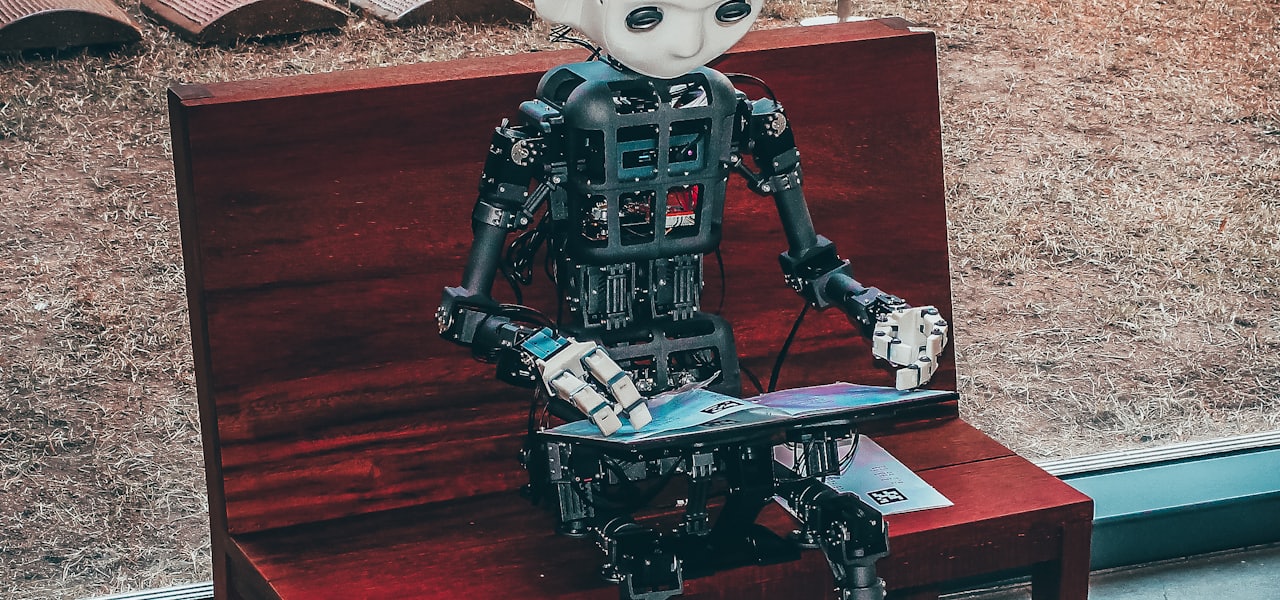
Ameca is a robotic humanoid created in 2021 by Engineered Arts, headquarters in Falmouth, Cornwall, United Kingdom. The project commenced in February 2021, and the first public demonstration was at the CES 2022 show in Las Vegas. Ameca's appearance features grey rubber skin on the face and hands, and is specifically designed to appear genderless. In 2024, an Ameca unit was installed in Edinburgh in the UK to reside at the National Robotarium. Ameca generation 3 has been released and showcased at ICRA 2025 along with Ami. == History == The first generation of Ameca was developed at Engineered Arts headquarters in Falmouth, Cornwall, United Kingdom. The project started in February 2021, with the first video revealed publicly on 1 December 2021. Ameca gained widespread attention on Twitter and TikTok ahead of its first public demonstration at the Consumer Electronics Show 2022, where it was covered by CNET and other news outlets. In 2022, Ameca presented an Alternative Christmas message by British TV Channel 4 for Christmas Day. Ameca was associated with the Museum of the Future's robotic family, where it could interact with visitors. In 2024, an Ameca unit was installed in Edinburgh in the UK to reside at the National Robotarium. In January 2026, Ameca served as an ambassador for the European Space Agency (ESA) at the 18th European Space Conference. == Features == It is designed as a platform for further developing robotics technologies involving human-robot interaction. utilizes embedded microphones, binocular eye mounted cameras, a chest camera and facial recognition software to interact with the public. Interactions can be governed by either OpenAI's GPT-3 or human telepresence. It also features articulated motorized arms, fingers, neck and facial features. Ameca's appearance features grey rubber skin on the face and hands, and is specifically designed to appear genderless. == Public appearances == Computer History Museum, California Heinz Nixdorf MuseumsForum, Paderborn, Germany Copernicus Science Center, Warsaw, Poland Museum of the Future, Dubai Consumer Electronics Show 2022 Deutsches Museum Nuremberg OMR Festival 2022 Hosted by Vodafone GITEX 2022 International Conference on Robotics and Automation 2023 International Telecommunication Union AI for Good Global Summit 2023 Sphere (Not Ameca, Custom humanoid named Aura built on Ameca technology)
Robinson compass mask
In image processing, a Robinson compass mask is a type of compass mask used for edge detection. It has eight major compass orientations, each will extract the edges in respect to its direction. A combined use of compass masks of different directions could detect the edges from different angles. == Technical explanation == The Robinson compass mask is defined by taking a single mask and rotating it to form eight orientations: North: [ − 1 0 1 − 2 0 2 − 1 0 1 ] {\displaystyle {\text{North:}}{\begin{bmatrix}-1&0&1\\-2&0&2\\-1&0&1\end{bmatrix}}} North West: [ 0 1 2 − 1 0 1 − 2 − 1 0 ] {\displaystyle {\text{North West:}}{\begin{bmatrix}0&1&2\\-1&0&1\\-2&-1&0\end{bmatrix}}} West: [ 1 2 1 0 0 0 − 1 − 2 − 1 ] {\displaystyle {\text{West:}}{\begin{bmatrix}1&2&1\\0&0&0\\-1&-2&-1\end{bmatrix}}} South West: [ 2 1 0 1 0 − 1 0 − 1 − 2 ] {\displaystyle {\text{South West:}}{\begin{bmatrix}2&1&0\\1&0&-1\\0&-1&-2\end{bmatrix}}} South: [ 1 0 − 1 2 0 − 2 1 0 − 1 ] {\displaystyle {\text{South:}}{\begin{bmatrix}1&0&-1\\2&0&-2\\1&0&-1\end{bmatrix}}} South East: [ 0 − 1 − 2 1 0 − 1 2 1 0 ] {\displaystyle {\text{South East:}}{\begin{bmatrix}0&-1&-2\\1&0&-1\\2&1&0\end{bmatrix}}} East: [ − 1 − 2 − 1 0 0 0 1 2 1 ] {\displaystyle {\text{East:}}{\begin{bmatrix}-1&-2&-1\\0&0&0\\1&2&1\end{bmatrix}}} North East: [ − 2 − 1 0 − 1 0 1 0 1 2 ] {\displaystyle {\text{North East:}}{\begin{bmatrix}-2&-1&0\\-1&0&1\\0&1&2\end{bmatrix}}} The direction axis is the line of zeros in the matrix. Robinson compass mask is similar to kirsch compass masks, but is simpler to implement. Since the matrix coefficients only contains 0, 1, 2, and are symmetrical, only the results of four masks need to be calculated, the other four results are the negation of the first four results. An edge, or contour is an tiny area with neighboring distinct pixel values. The convolution of each mask with the image would create a high value output where there is a rapid change of pixel value, thus an edge point is found. All the detected edge points would line up as edges. == Example == An example of Robinson compass masks applied to the original image. Obviously, the edges in the direction of the mask is enhanced.